
Every day, your office hears where things are working and where they’re getting stuck.
A caregiver calls because they’re unsure what they still need to finish for onboarding. A family calls again because they haven’t heard when care will start. A scheduler spends part of the afternoon tracking down information that someone else already collected.
Those conversations tell you a lot about how your agency operates. But once the call ends and the next one starts, it’s hard to step back and learn from them.
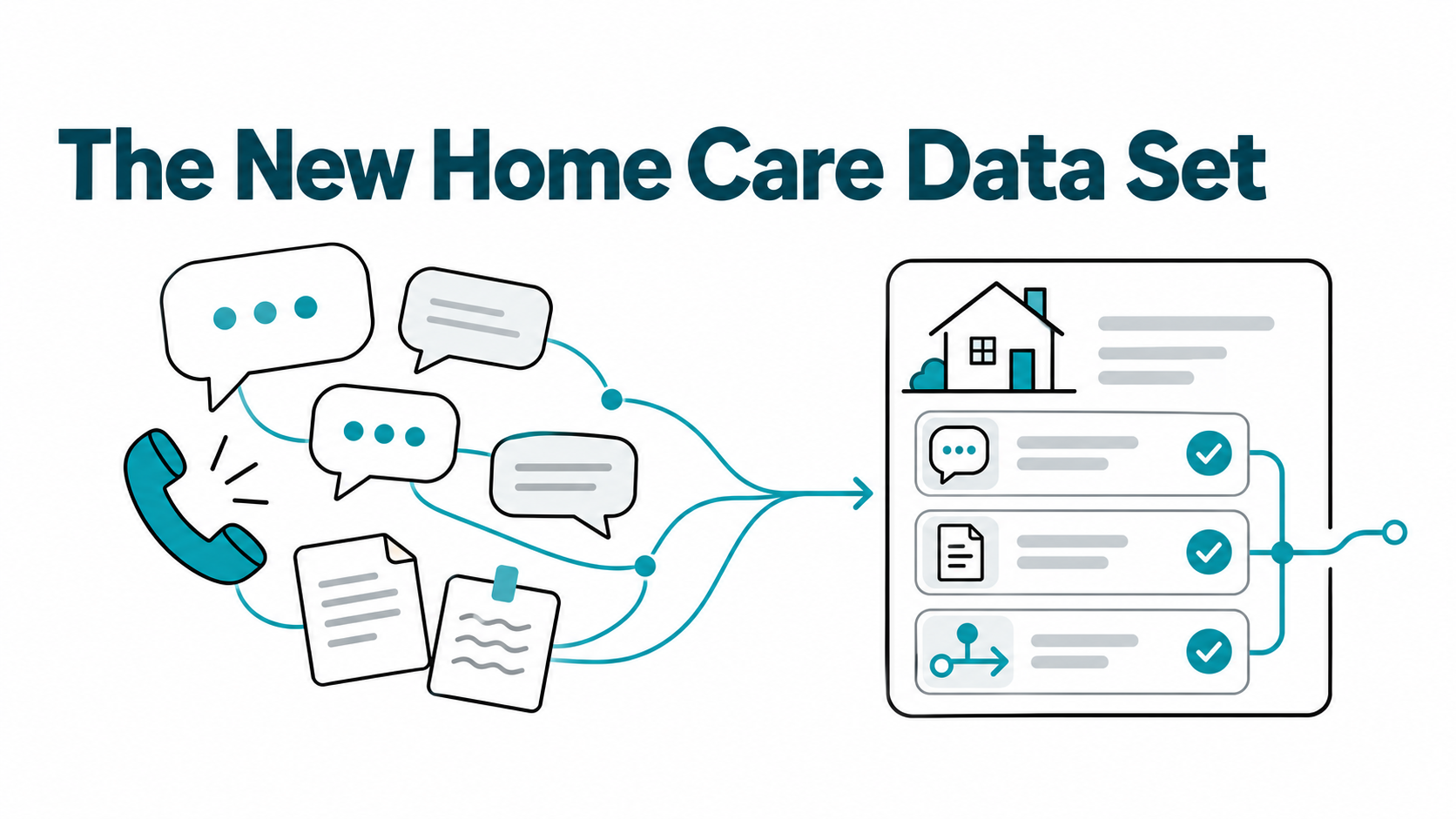
At SmartAutomations.Care, we’re turning those everyday conversations into a new home care data set.
You probably measure hours of care, revenue, client growth, and caregiver hiring. This adds a view into the administrative work behind those numbers: what people are calling about, where the back-and-forth happens, and what keeps taking up the team’s time.
Working in my family's home care business, I saw how much of that information stayed with whoever answered the phone. You might know that you’d answered the same question three times that day, but you wouldn’t necessarily know that two other people in the office were hearing it too.
When those conversations are captured and organized, you have a way to see the pattern and figure out what needs attention.
What can this new data set help us understand?
Take caregiver onboarding. If new caregivers keep calling to ask which documents they still need to submit, that gives you a specific process to look at. Are the instructions clear? Do they know what’s outstanding? Does your team have to check several places just to give them an answer?
You could use what you learn to update the instructions, make the next step easier to find, or automate a reminder. Then you can look at whether those same questions keep coming up.
Or consider a family calling for an update on starting care. The person answering may have to find whoever handled the intake, check what’s been completed, and call the family back. If that happens repeatedly, you may have a handoff problem. Making the status and next step available to the team could save several calls and give the family an answer sooner.
That’s where this gets useful. You can start connecting the conversations your team is having to the processes creating extra work.
Giving the team more time for people
There’s also everything that needs to happen after a conversation. Notes need to be written, records updated, and follow-up assigned. Documentation required for compliance still needs to get done, even on the busiest days.
Capturing information as it’s shared can help reduce the time spent remembering, retyping, and passing details between people. Looking across those conversations can help you find other repetitive work that could be simplified.
For me, that’s the point of building this data set. We want to help agencies understand what’s making the day harder than it needs to be and do something about it.
That could mean more time to talk through a family’s concerns. More time to check in with a caregiver. More capacity to help the next person without leaving a pile of work for the end of the day.
SmartAutomations.Care started with helping keep details from getting lost. We’re building on that by turning conversations into a new home care data set that agencies can use to find friction, improve how work gets done, and give their teams more time for the people who need them.